
The Hidden Cost of a Missed 1-Star Review
A one-star change in rating moved restaurant revenue 5-9% in a Harvard study. Here's what that means for a single bad review, why replying matters, and how to never miss one.
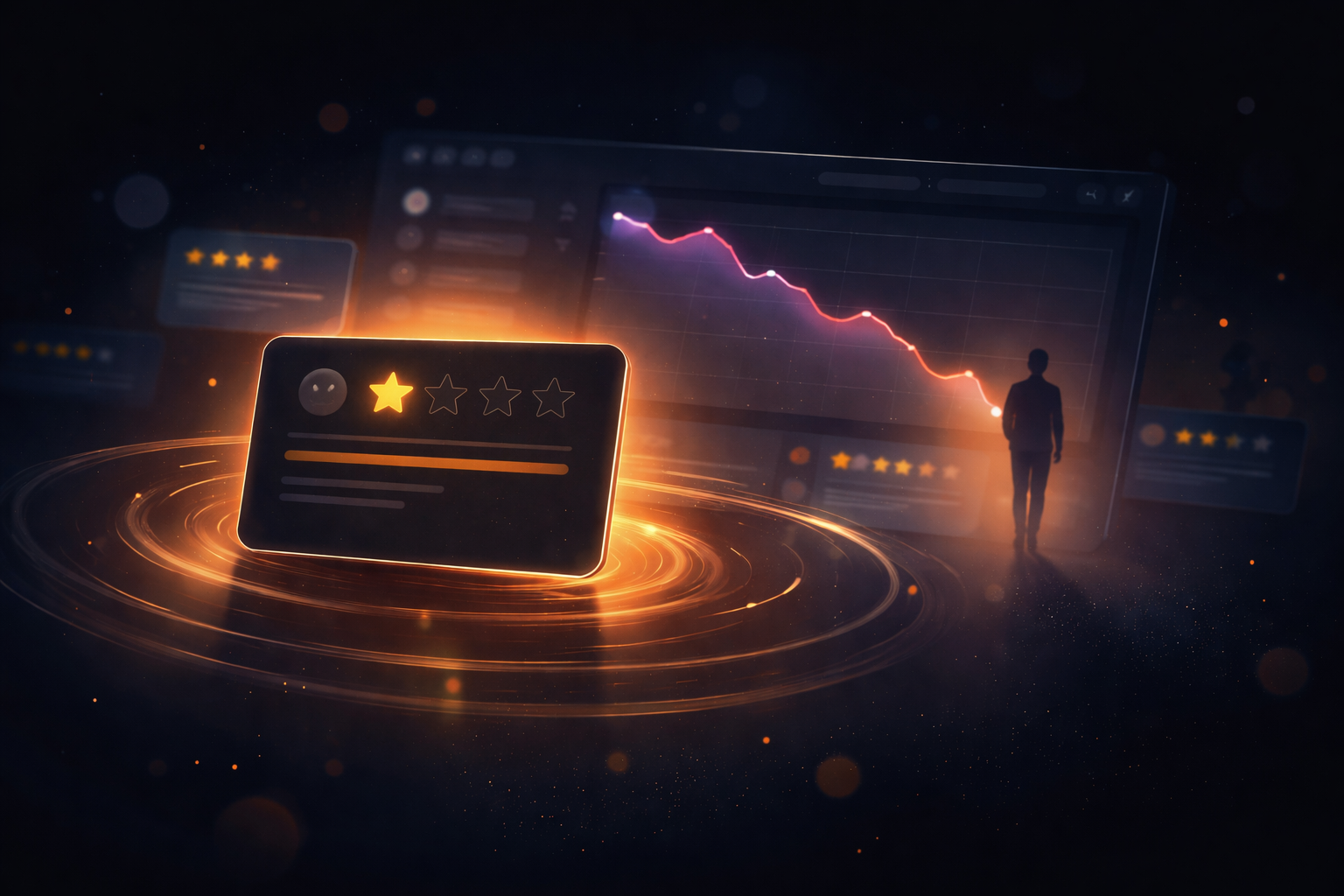
Ask any local business owner what keeps them up at night and "a bad review we didn't see in time" is near the top of the list. It should be. Your star rating is one of the first things a customer sees, and research has put a number on what it is worth.
The math behind a star
A Harvard Business School study of Yelp data from Seattle found that a one-star increase in a restaurant's rating led to a 5-9% increase in revenue. The effect was driven by independent restaurants; chains saw little change (Luca, "Reviews, Reputation, and Revenue: The Case of Yelp.com", HBS Working Paper 12-016).
One review rarely moves your average by a full star. But for a business with a few dozen reviews, a handful of 1-stars can move it by a few tenths, and a bad review sitting unanswered at the top of your profile is what new customers read first. Three things make it worse:
- Newest first. Many customers read the latest reviews before anything else, so a fresh 1-star gets more attention than an old 5-star.
- Thresholds. Customers compare ratings side by side. Slipping from 4.6 to 4.4 can be the difference between being picked and being scrolled past.
- Silence reads as neglect. A complaint with no reply tells the next reader nobody is listening.
Why replying matters
Here's the encouraging part: replying changes how customers read your reviews. BrightLocal's 2023 Local Consumer Review Survey found:
88% of consumers are likely to use a business that responds to all its reviews, positive or negative, against 42% for a business that doesn't respond to any (BrightLocal, 2023).
Timing matters too. A 1-star review that sits unanswered for a week signals neglect. The same review answered within a day, calmly and with a way to put things right, signals care. Same review, opposite impression.
Why teams still miss reviews in 2026
If speed matters this much, why do so many teams still miss the window? Three familiar failure modes:
- Manual checking. "I'll log into Google Business Profile every morning" works for a week and then life happens.
- Alert fatigue. Default notifications fire for every new review, so the 1-star alerts get lost in the stream of 5-stars.
- Single-channel alerts. An email that lands in an inbox at 10pm on a Friday is not going to save your weekend.
What a healthy review-response loop looks like
The teams that win here treat review response as an operational loop with four steps, not a chore:
- Detect new reviews quickly, not whenever someone remembers to look.
- Classify by rating, sentiment, and keyword so only meaningful reviews trigger an alert.
- Route the alert to the right channel for the urgency - WhatsApp for critical, email for routine.
- Respond from a single inbox, with templates for the common cases and a record of who replied.
How Reputify closes the gap
This is exactly the loop Reputify is built around.
- Automatic Google Business Profile sync: hourly on Scale, every six hours on Growth, daily on Starter.
- Custom alert rules that combine rating thresholds, sentiment, keywords, and location scope. Set "1 or 2 stars AND negative sentiment" and nothing else will fire that alert.
- Multi-channel notifications. Email, WhatsApp, and in-app - pick per user, per notification type, so the urgent alerts actually reach a human.
- AI reply suggestions so you can reply in the right tone (professional, friendly, apologetic) within minutes, not days.
The takeaway
Reviews are not just a PR problem. Your rating is tied to revenue, and the playbook is simple: catch reviews fast, triage them well, reply within a day. The businesses doing this aren't working harder - they've just stopped relying on manual monitoring.
The hidden cost of a missed 1-star review is not the review itself. It's the week it sat on your profile while you didn't know.
Try Reputify with a free trial, or book a demo to walk through reputation workflows with our team.